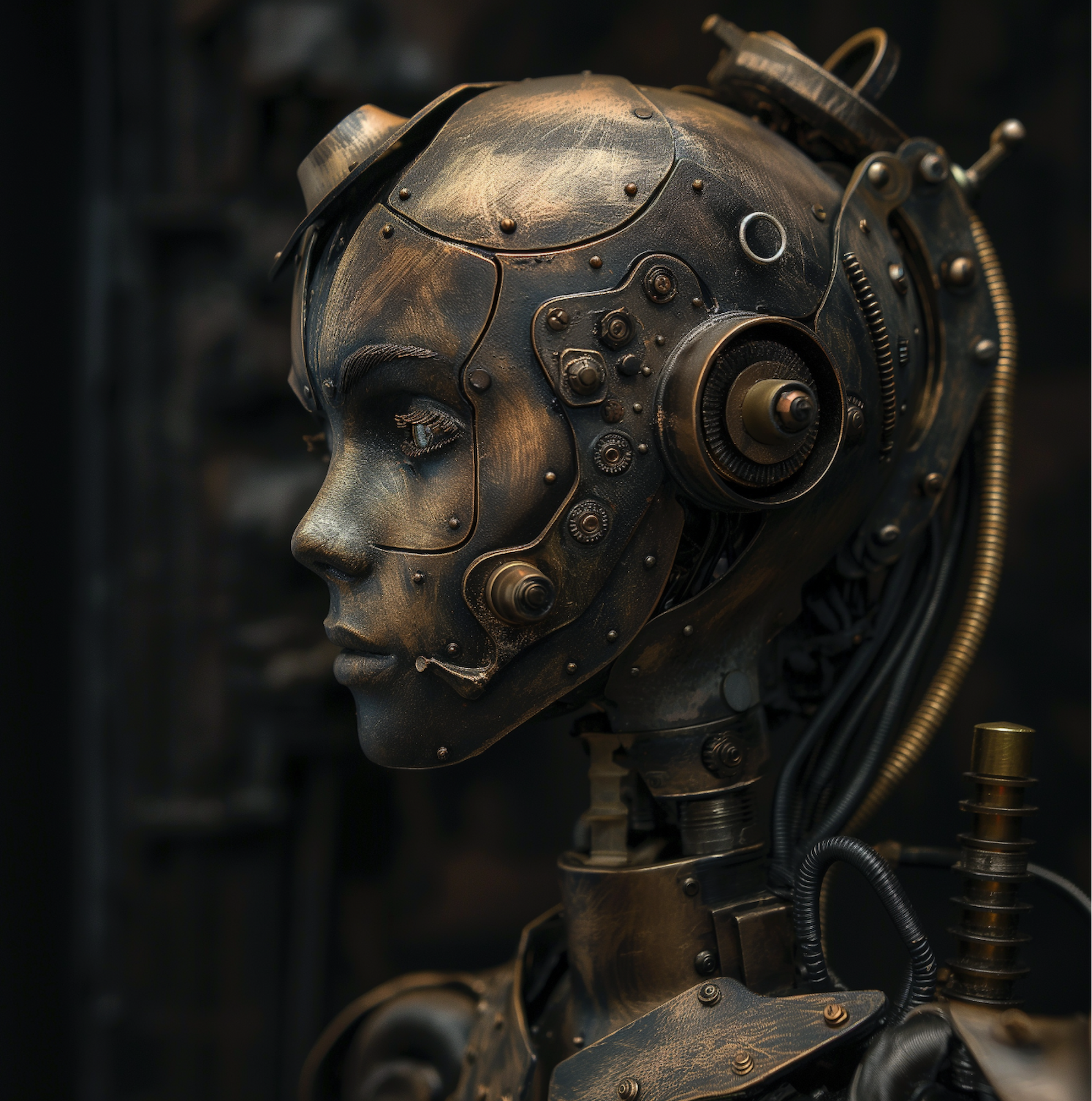
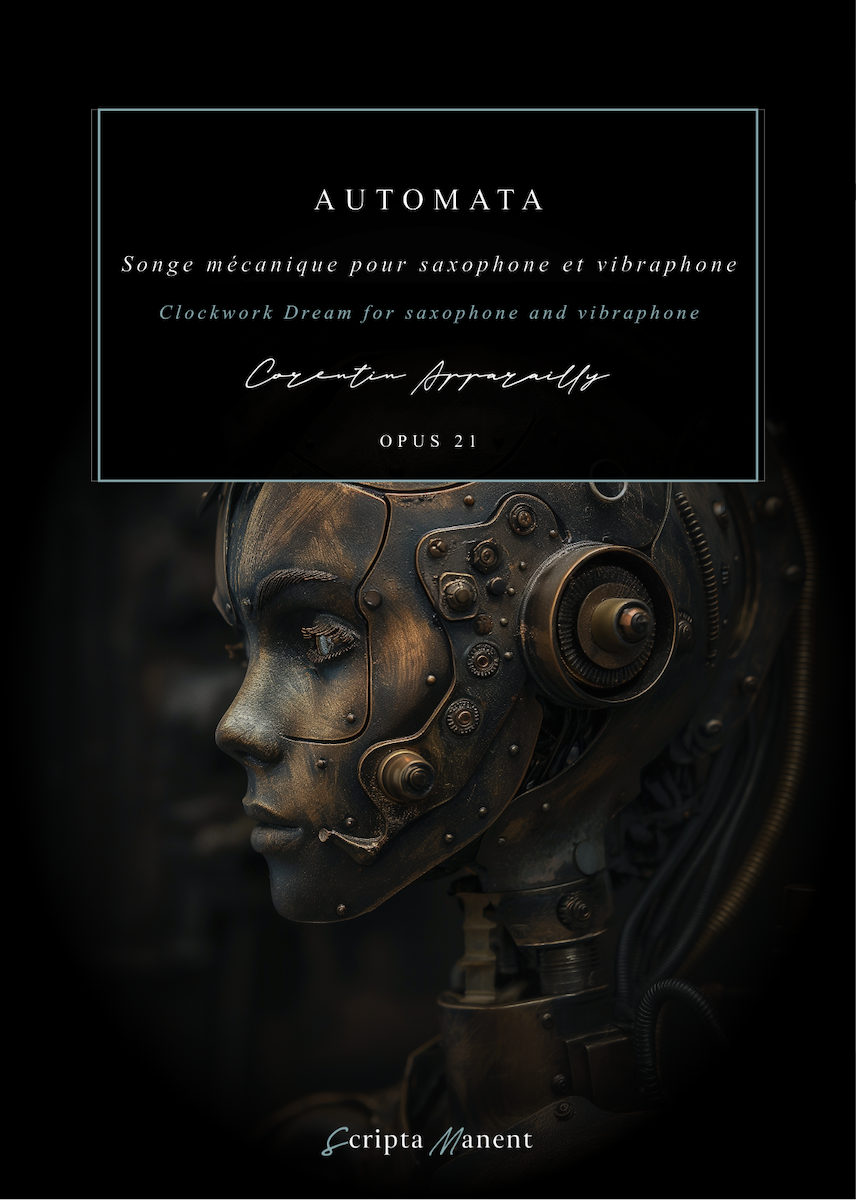
Automata seeks to revive, over three movements, the troubling emotion that enfolded Paris in the 18th century with the appearance of the first automata. Capable of playing music, drawing, or writing, these articulated humanoids arouse both fascination and dread among crowds from all over the world. Clockmakers, puppeteers, and inventors rival in ingenuity to create androids through technological mastery that seem alive, and even more so, reproduce all our artistic gestures to seem truly human.
Combining the warm breath of woodwinds with the mechanical sound of percussion, alternating the dreamlike roundness of the vibraphone and the slaps of the saxophone, the piece blurs the lines between humans and machines, transporting us into the Uncanny Valley—a theorized phenomenon of eerie disquiet felt when contemplating a being whose nature eludes us.
Today, although few traces of these creations remain, their legacy endures: these early automata are the ancestors of our modern robots, heralds of artificial intelligence and the complex philosophical questions that lie ahead.