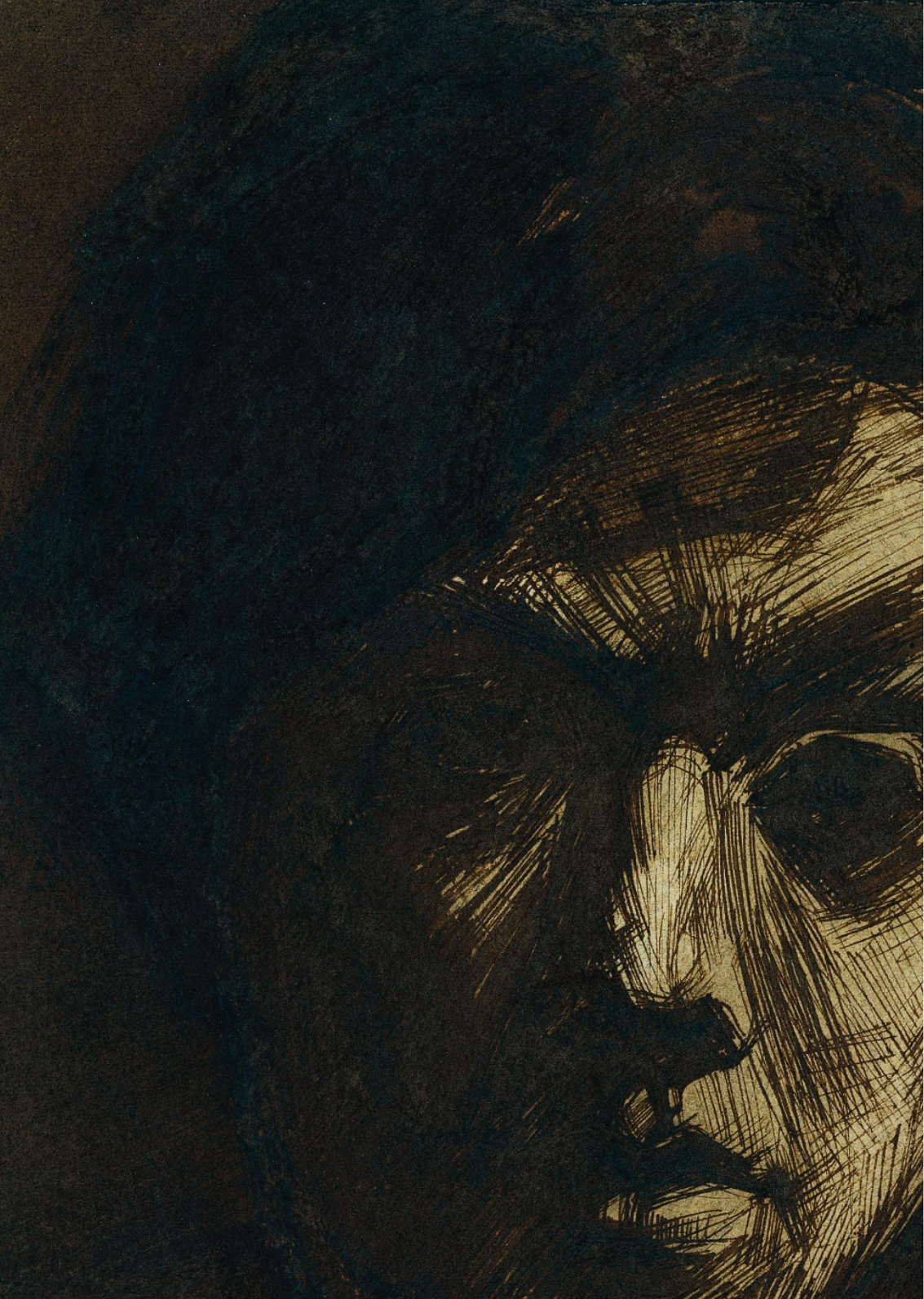
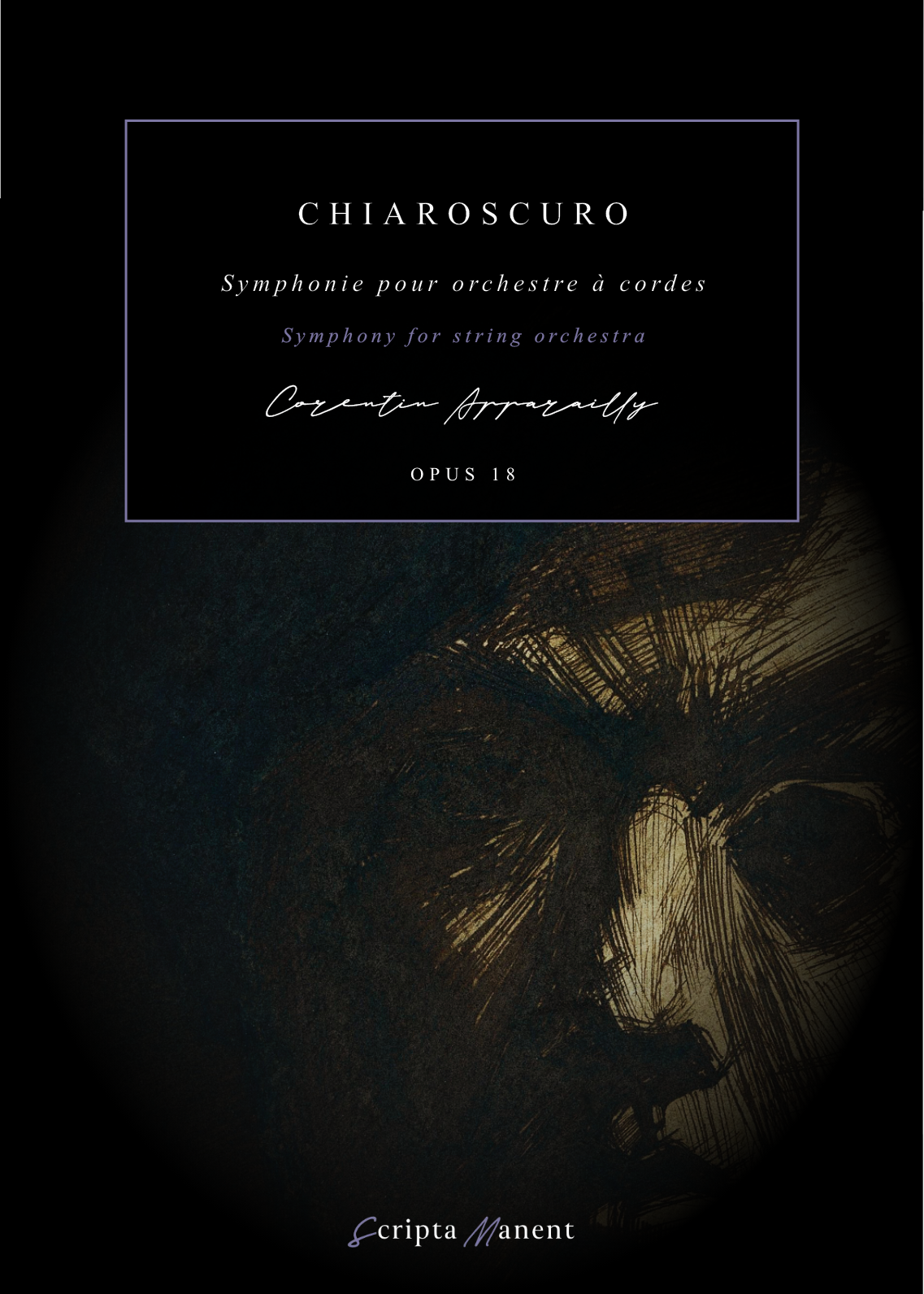
Oscar Wilde's The Picture of Dorian Gray portrays a terrible pact: that of a man whose face remains untouched while his portrait alone bears the weight of each of his sins. Year after year, the canvas decays in his place, becoming unrecognizable and hideous, while he continues to smile, immutable, eternally young.
Chiaroscuro is likewise driven by a continuous decay. The second theme of the piece is a distorted quotation from Forest Scenes, the piano music Dorian plays at the very beginning of the novel, when nothing has yet been corrupted, when the portrait and the man are still a single face. This theme traverses the entire work, but it never returns as it originally was. With each appearance, it grows dirtier, warped, heavier, as though every listening left a mark upon it, much like the painting absorbing each of Dorian's sins in his place.
The string writing embeds this corruption into its very gesture: glissandi dripping like fresh paint left to run, gradually blurring the sharp contours of the initial theme. Beauty is never entirely erased; it is swallowed beneath what layers over it, stratum upon stratum, until nothing remains of the original face but a warped memory beneath the hideous and terrifying matter that covered it.